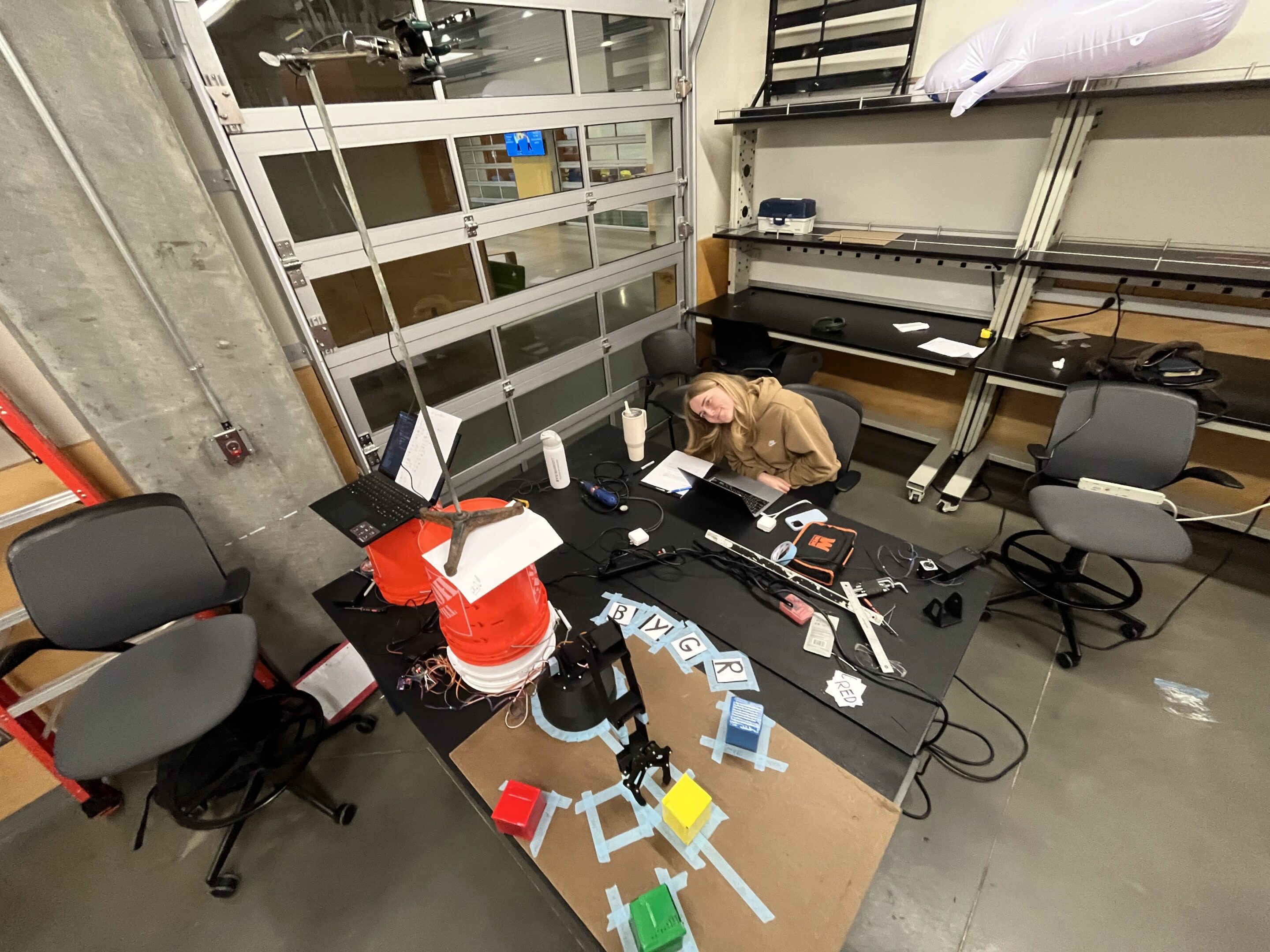
Color Sorting Arm
Skills
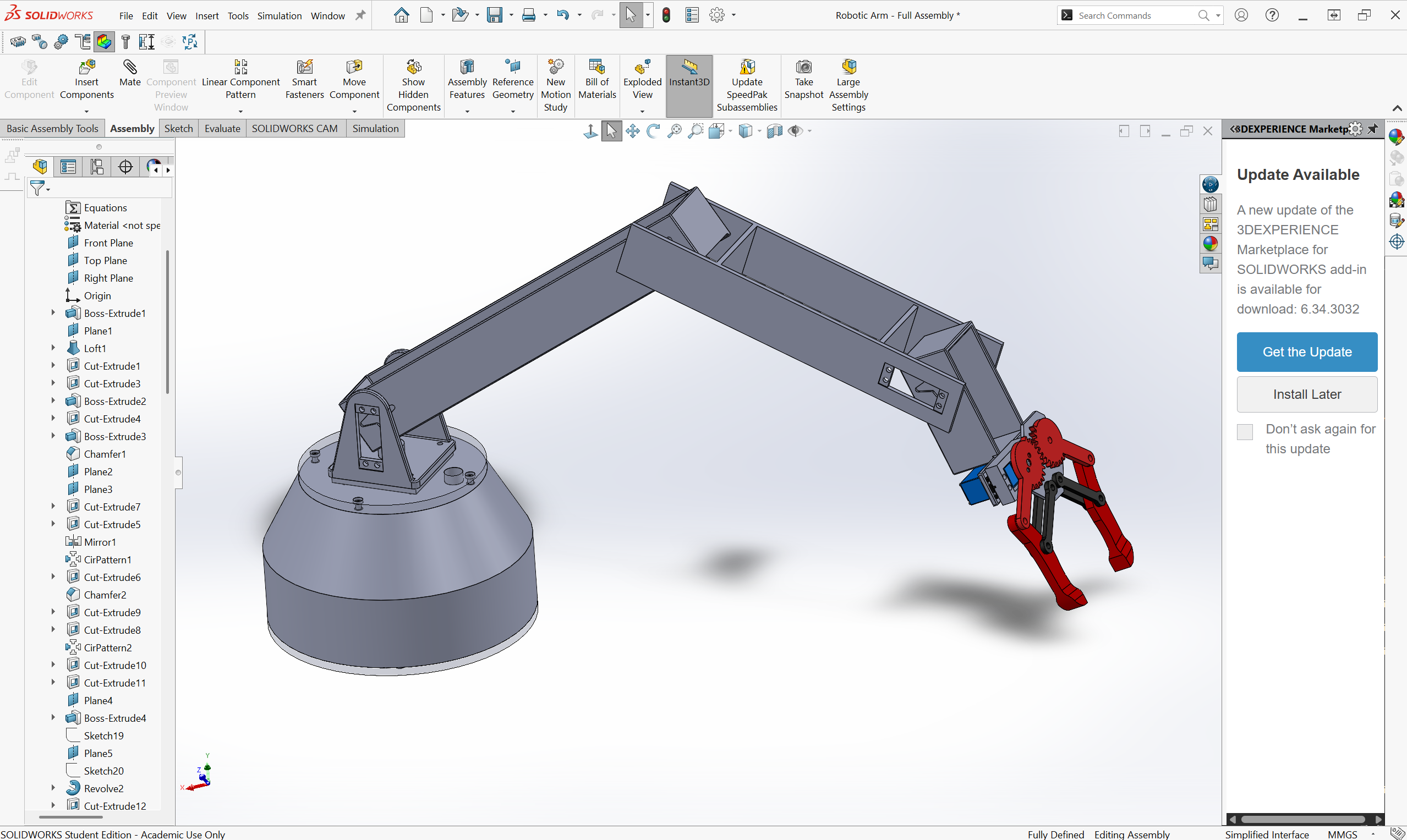
- CAD (SolidWorks)
- Hands-on prototyping
- Motor Integration
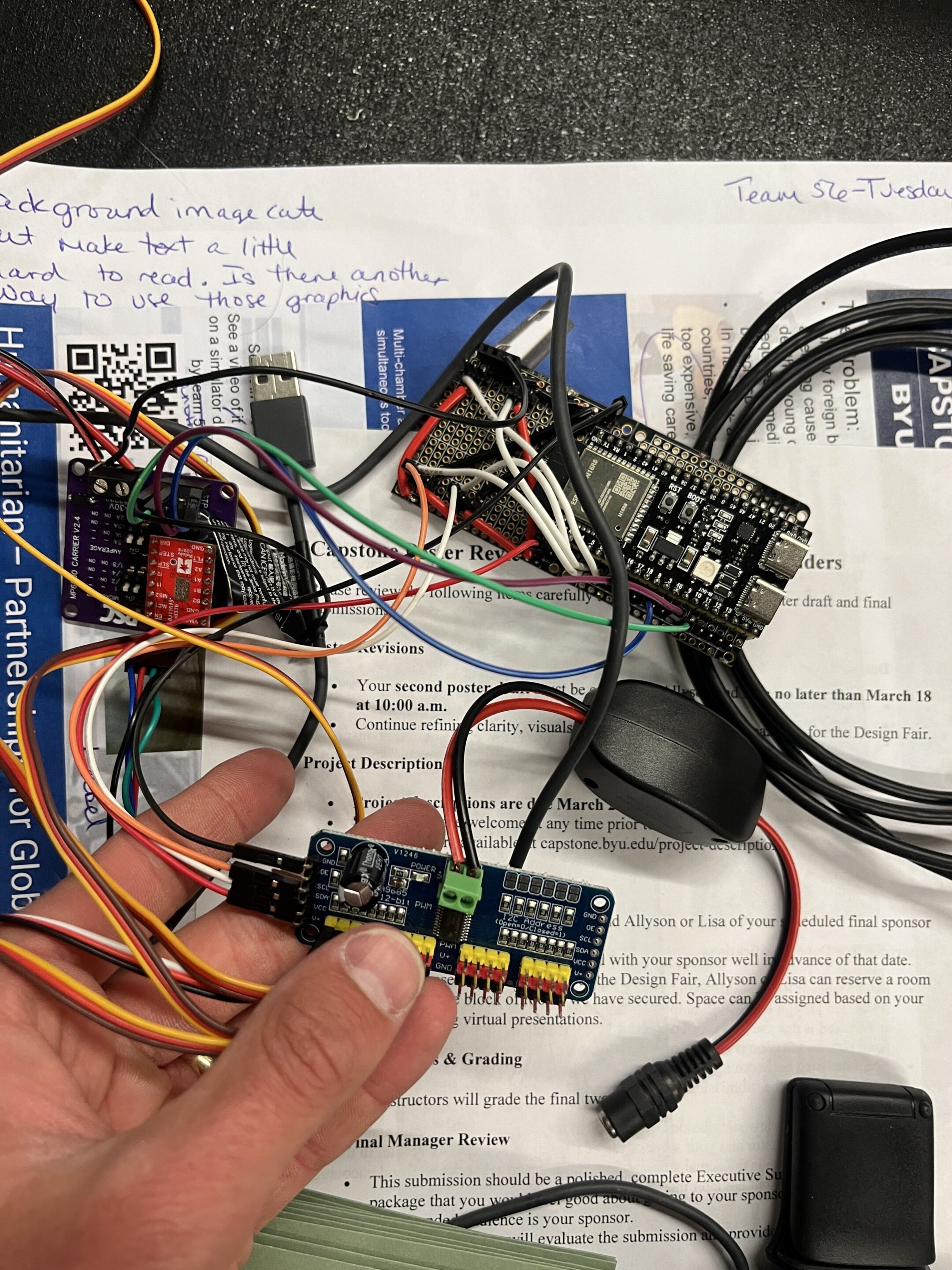
- Circuit Design & Wiring
- Problem Solving & Iteration
- Python
- C++
- Computer vision
- Reverse kinematics
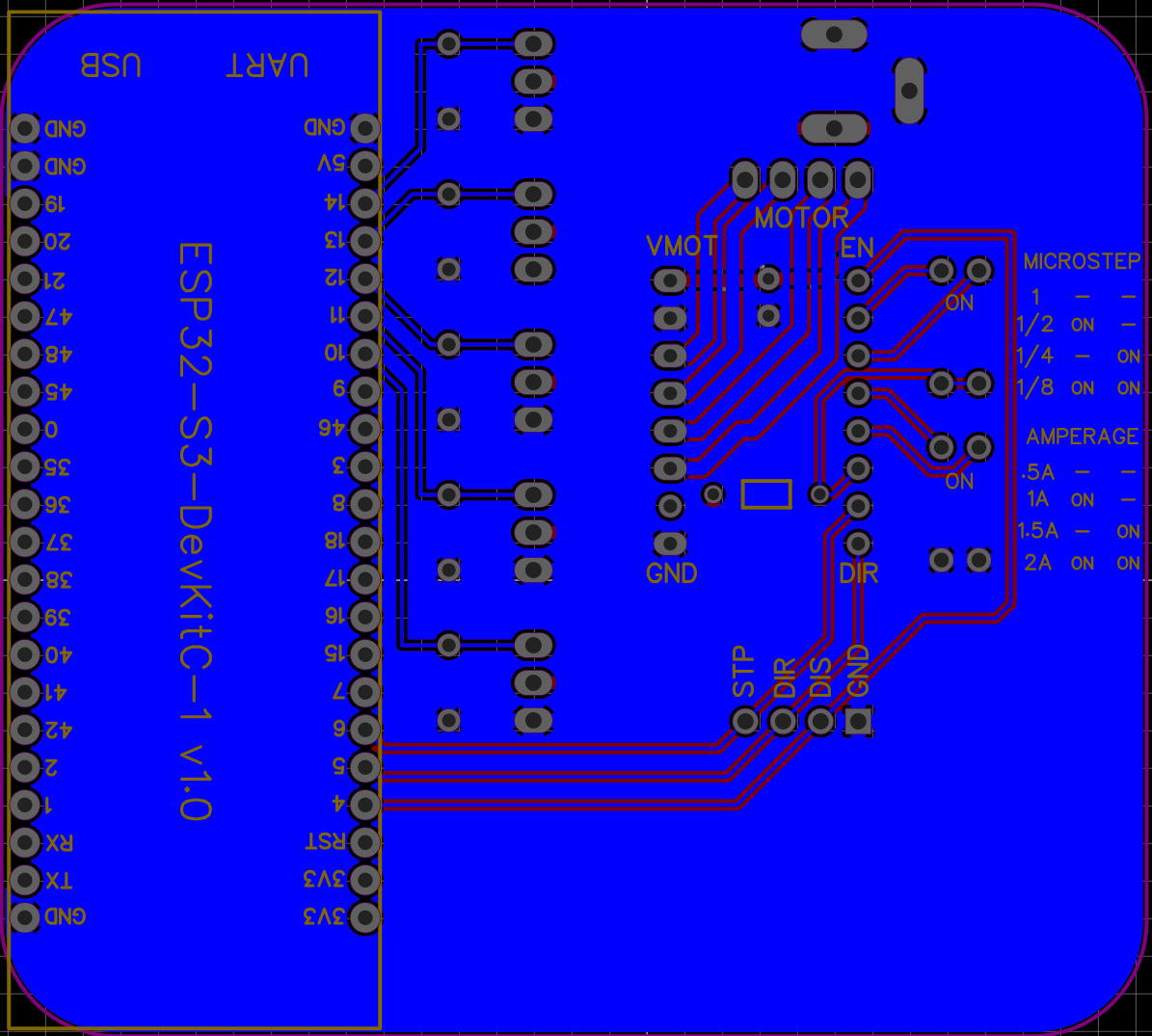
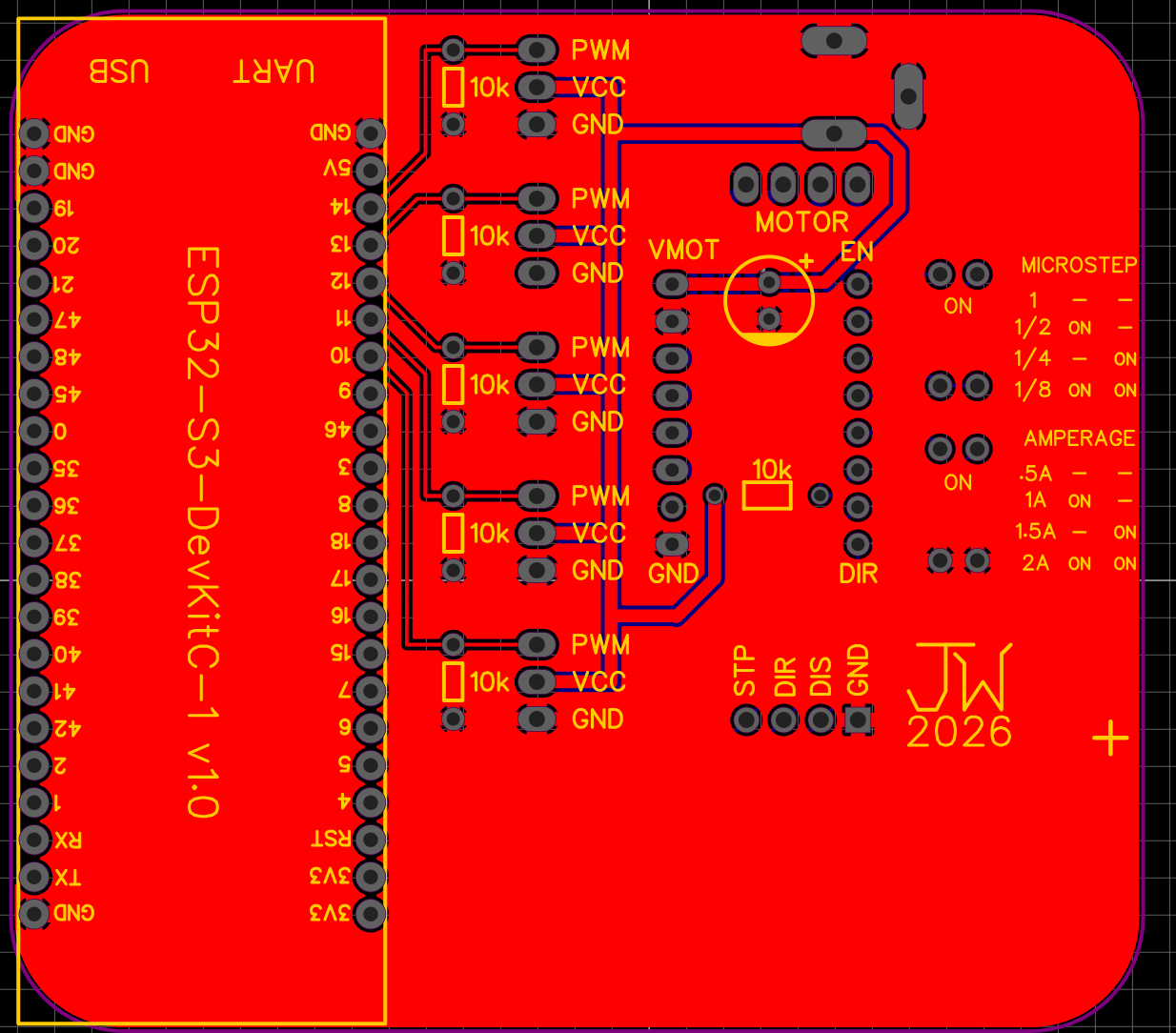
- PCB Design
- 3D printing
- Microcontroller
- Master-slave controller integration
Problem
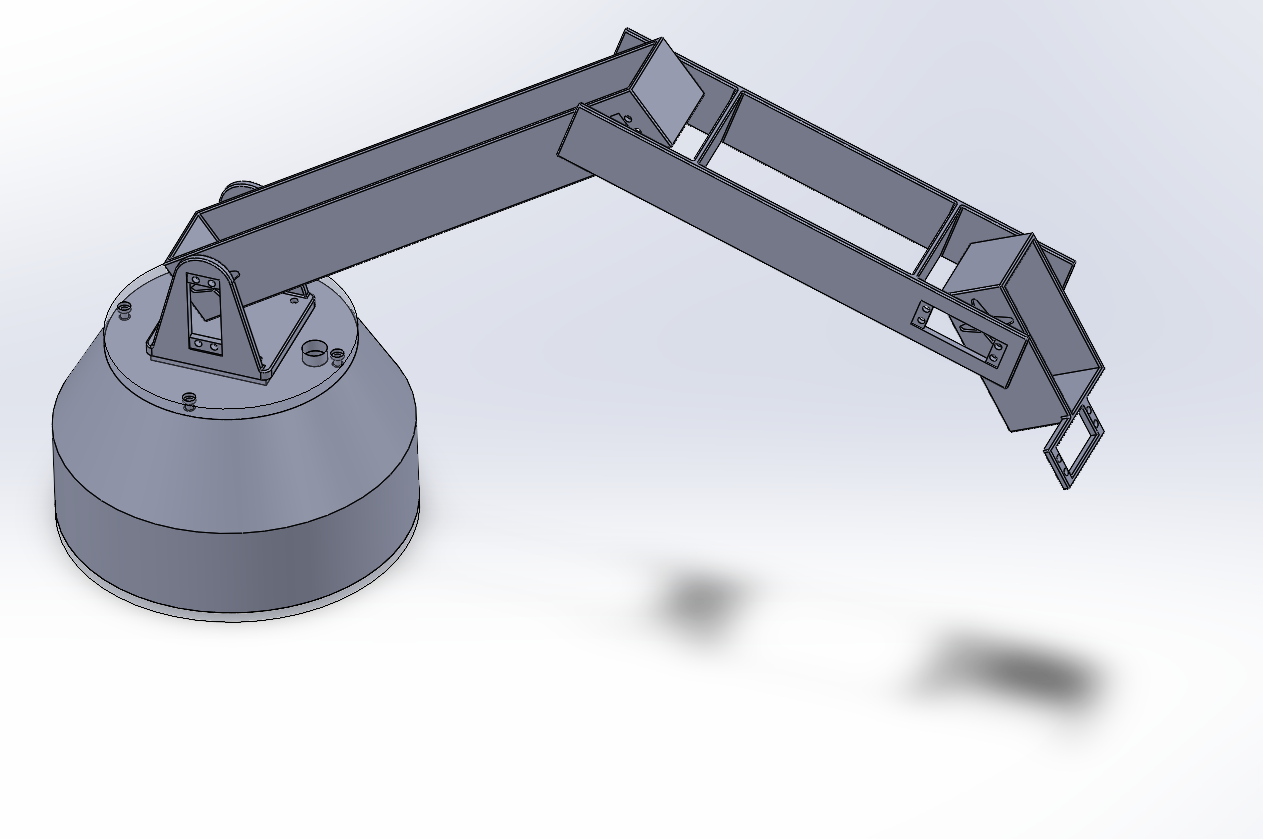
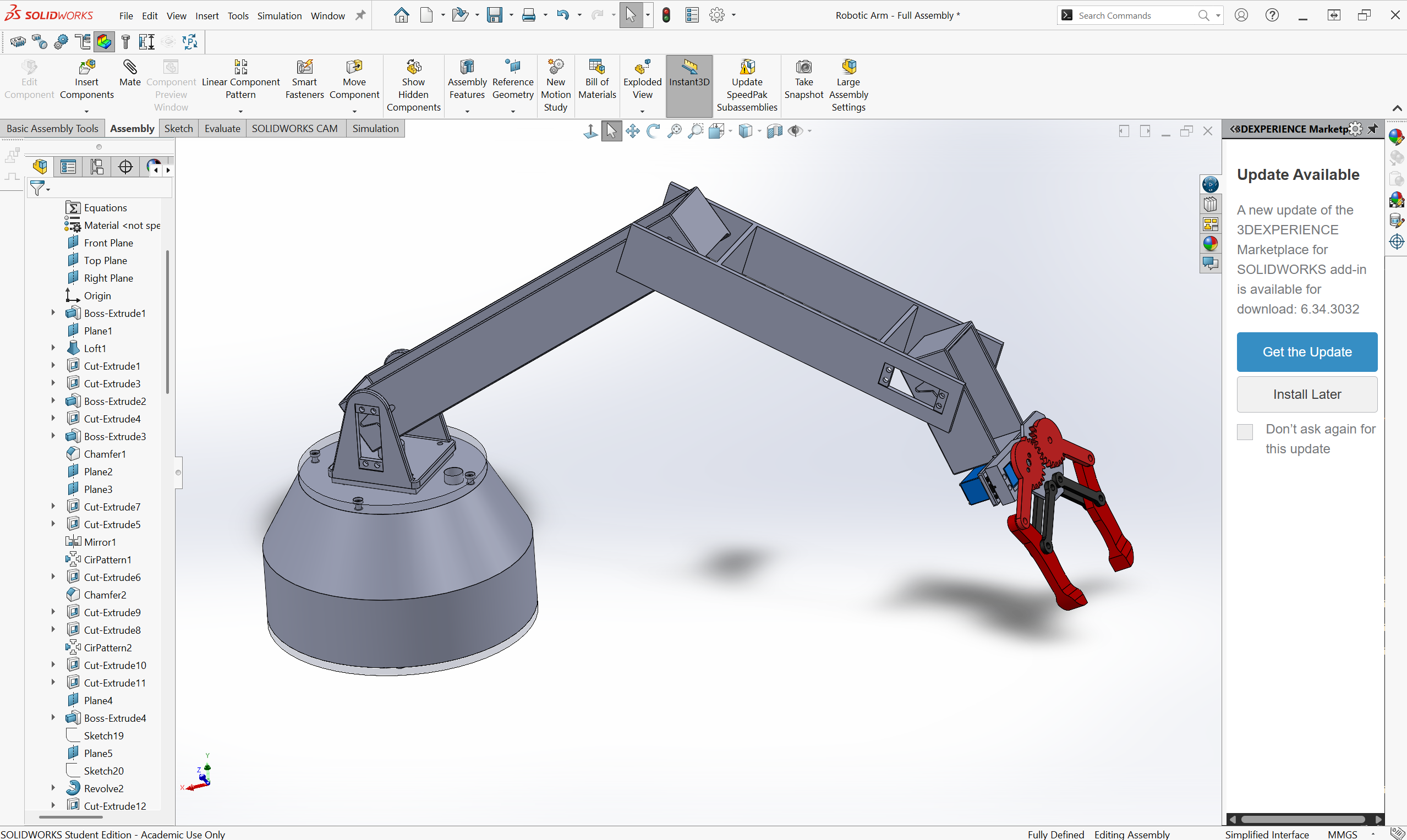
Computer vision and robotics are growing fields in engineering, and I have been wanting to gain some experience in those feilds. For that reason, I decided to work on a robotic arm that sorted blocks based on their colors.
Solution
To solve this problem, I talked to some peers and professors to get an idea of where to start. Based on their advice, my personal opinion, and advice I found online, I went through with the following steps.
Basic Project Steps
- Studying
- Basic timeline planning
- Basic hand sketching
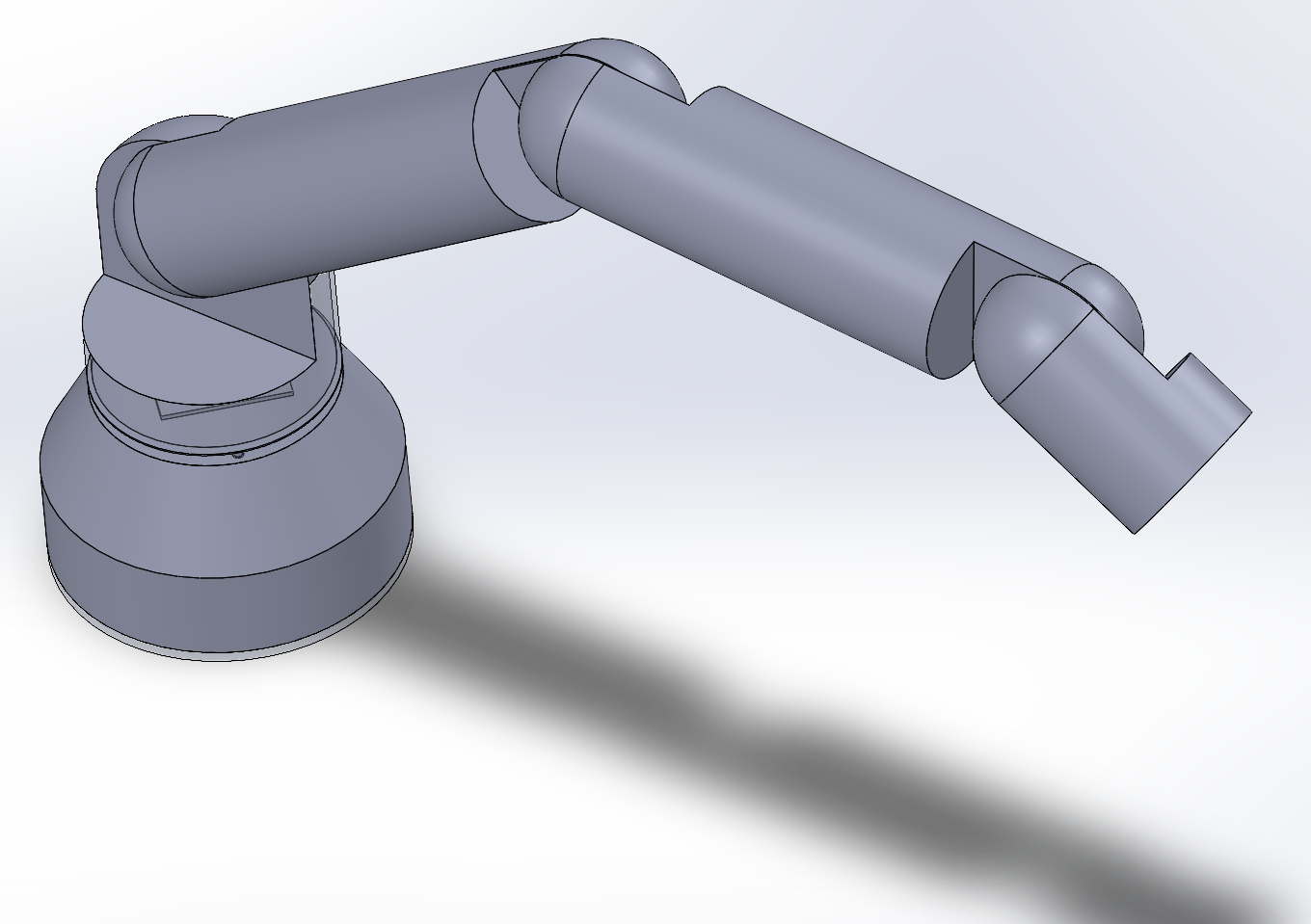
- CAD Design 1
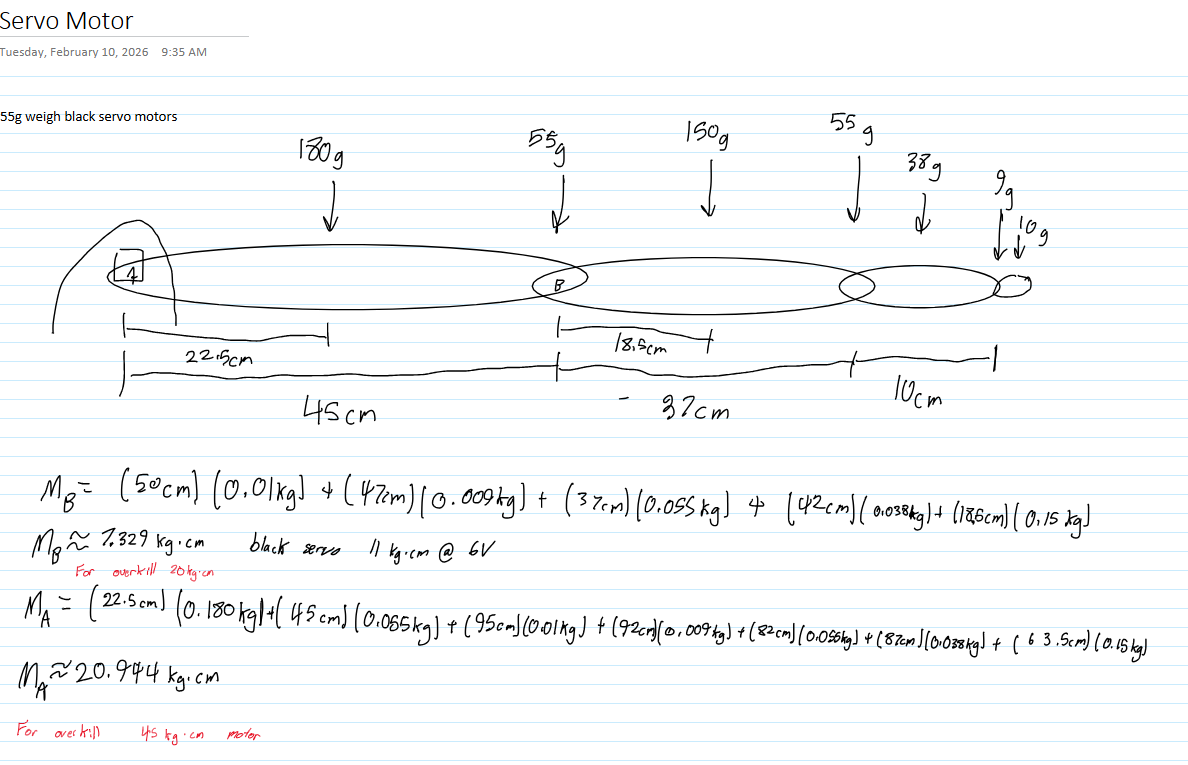
- Calculating required motor strength
- CAD Design 2
- Recalculate required motor strength
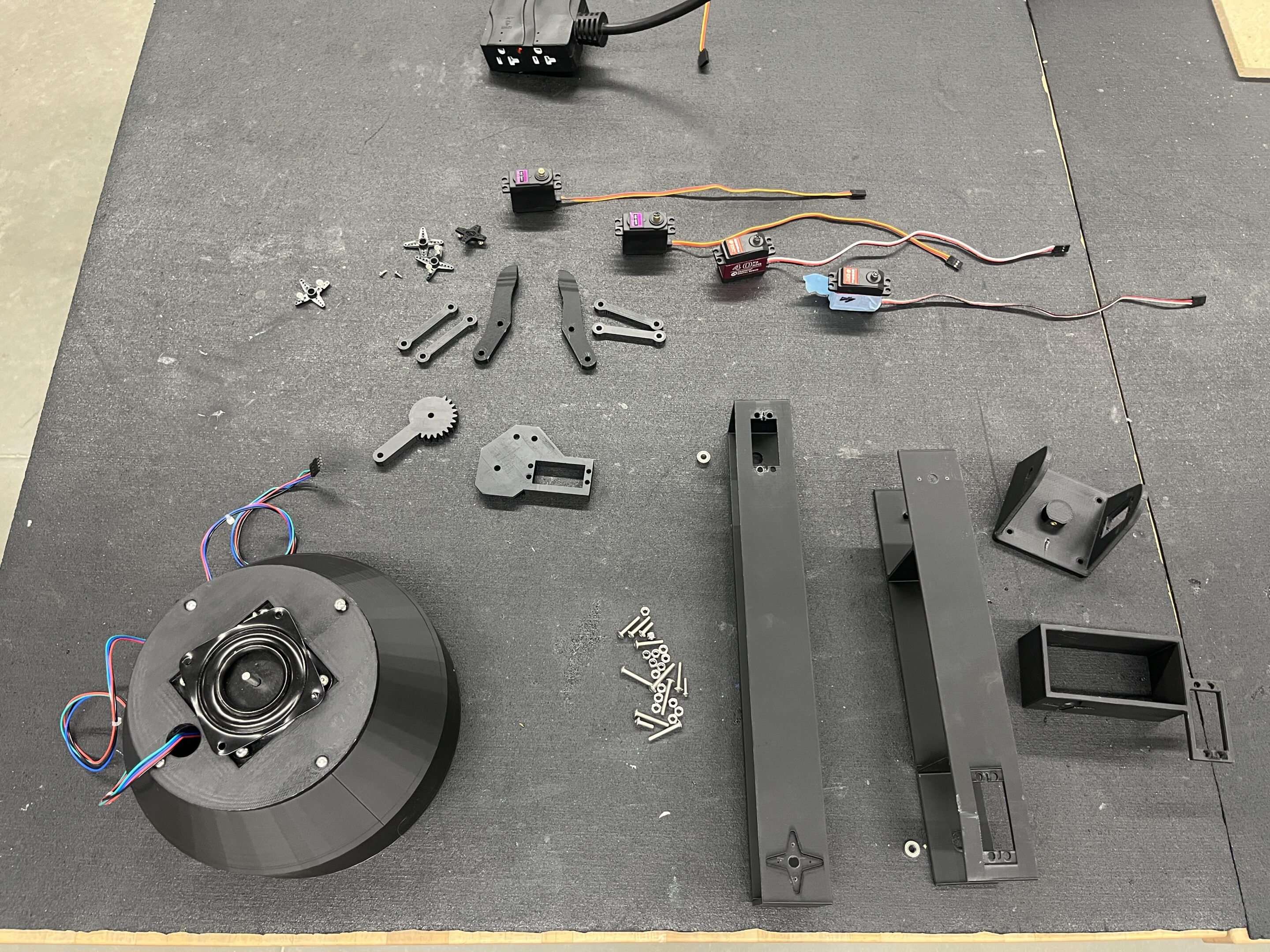
- Purchase servo motors, stepper motor, ball bearings, lazy susan bearing, hardware
- Mechanical development
- 3D printing
- Threaded insert installation
- Bearing installation
- Counterweight installation
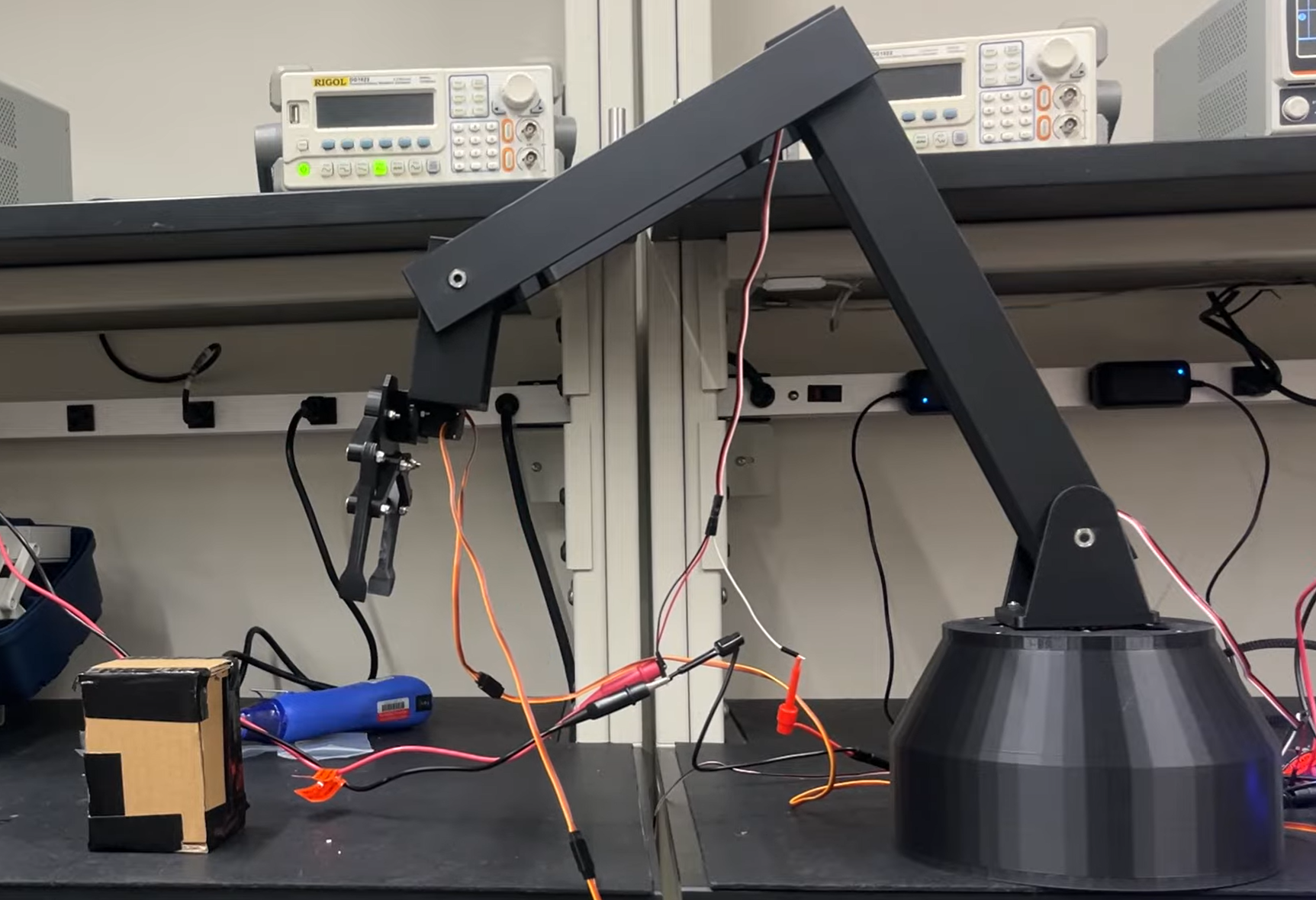
- Motor integration
- Testing arm with oscilloscope and power supply
- Basic computer vision
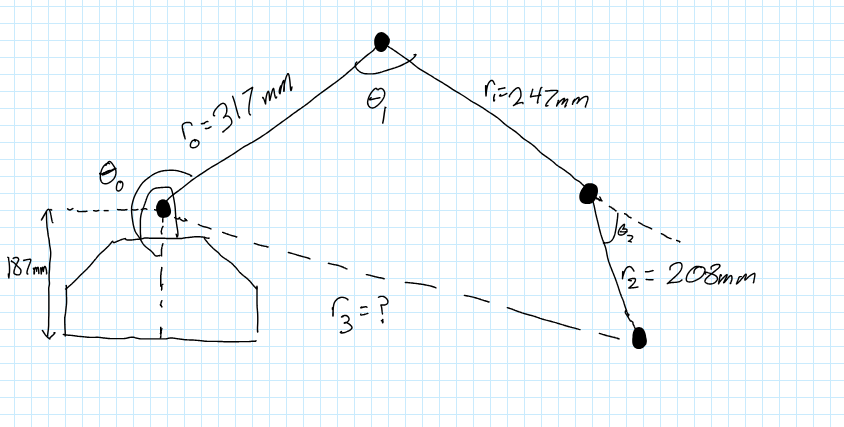
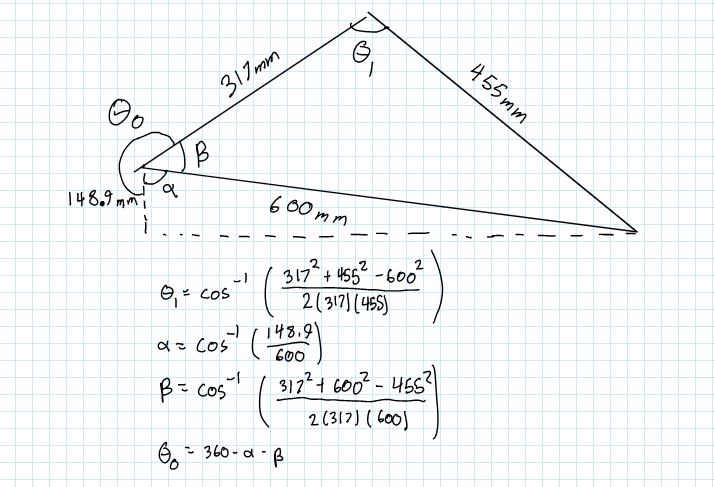
- Development and integration of equations and code for reverse kinematics
- Developed sorting area and colored squares
- Further development of computer vision
- Test to sort four colored objects
Testing
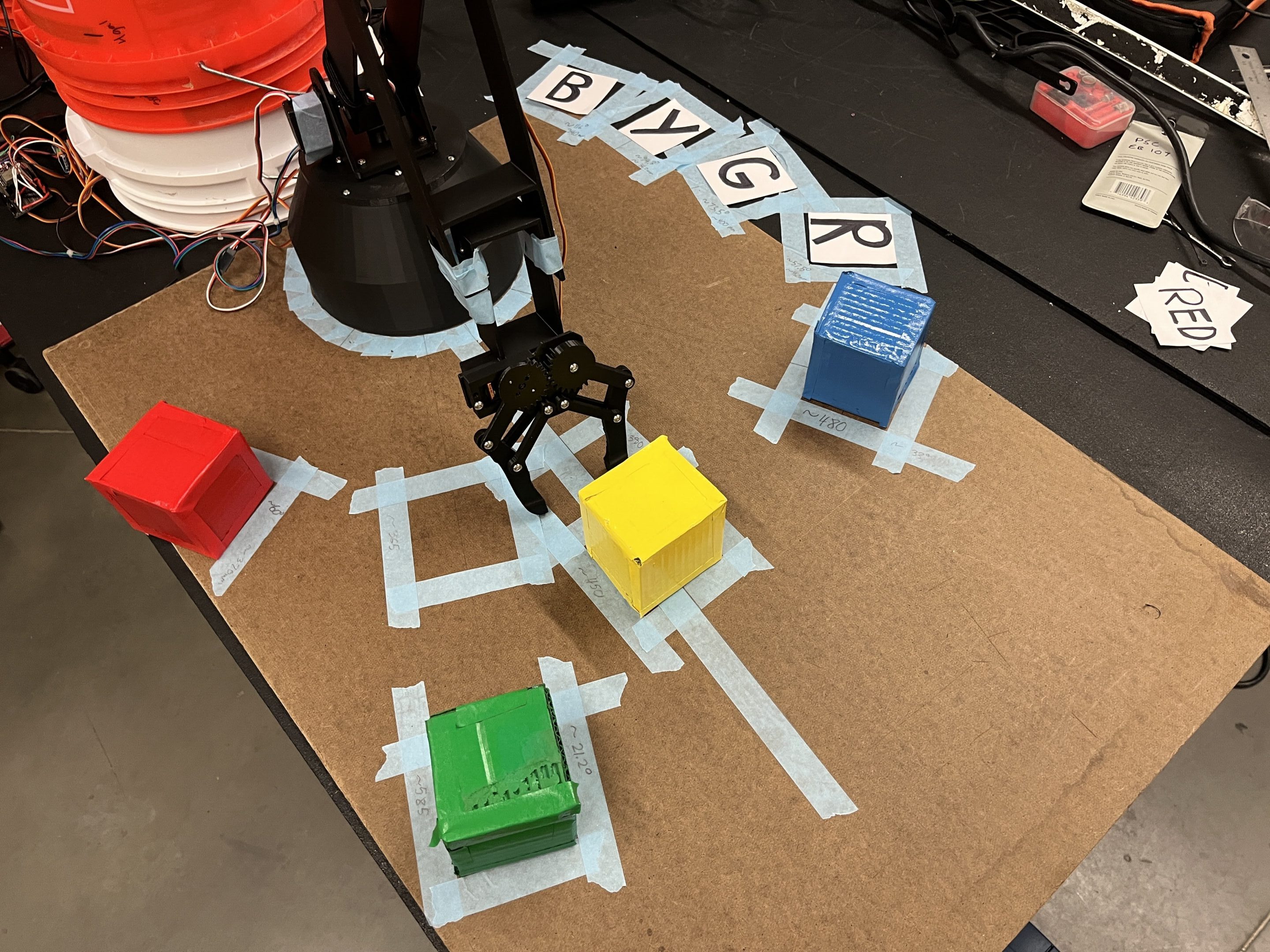
Testing was completed throughout the design process. Initial testing showed that a different design would need to be implemented to reduce the weight of the arm, allowing cheaper motors to be used. It also found that the servos were moving improperly, which was solved with the installation of a servo motor driver. Recent testing showed the servos lacked long-term strength as they started to give out after extended testing, hence why the wrist servo was removed (to reduce weight and the moment on the shoulder joint). Testing also showed success in the computer vision's ability to obtain the color and coordinates of the object and the docking locations. It also showed that the math beind the reverse kinematics was correct and effective.
Outcome
Current capabilities
The robotic arm can detect the polar coordinates of red, yellow, blue, and green blocks using the center of the arm base as (0,0). There are predetermined points that are used for calibrating the coordinate system. The coordinates are then put in the arm code, which moves the arm to different locations
Future goals
Currently, my master device (my laptop) retrieves the coordinates of the object, then I have to type it into my slave device terminal to move the arm. In the future, I want the master device to communicate directly with my slave device. One thing I also want to improve is the computer vision. As of right now, the coordinates that it retrieves are right about 60% of the time. I want to refine the configuration and get more accurate coordinates