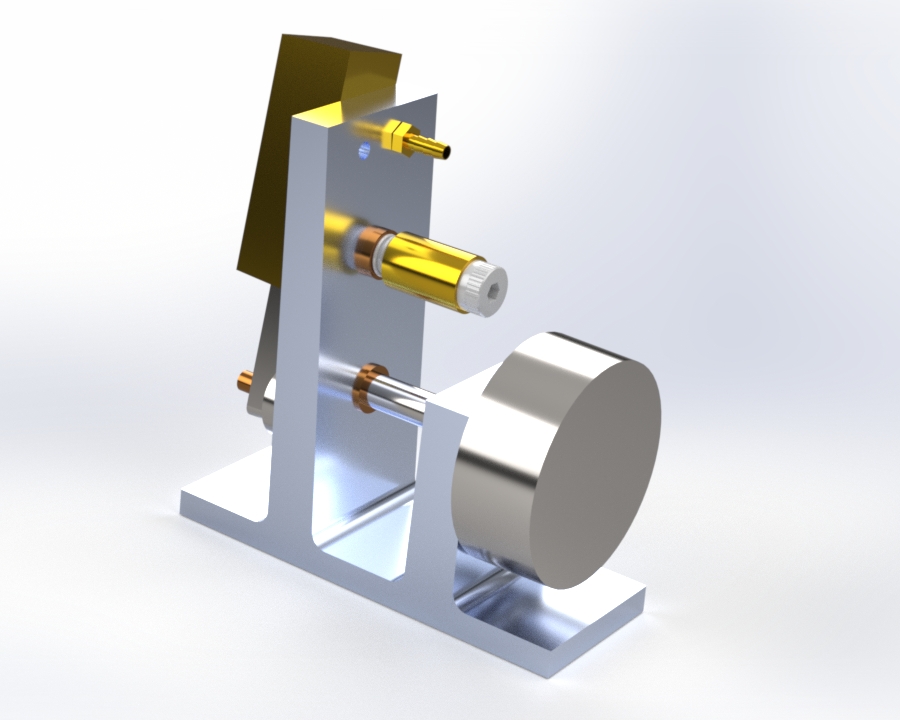
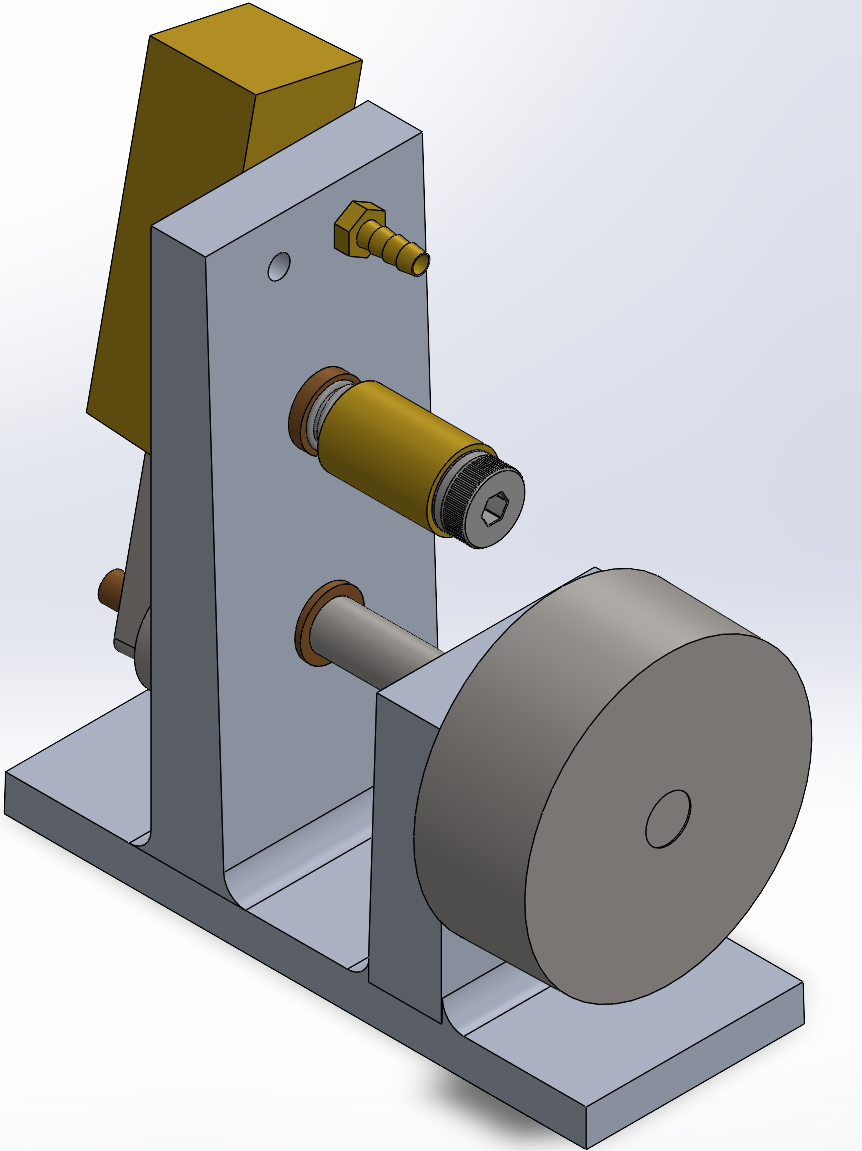
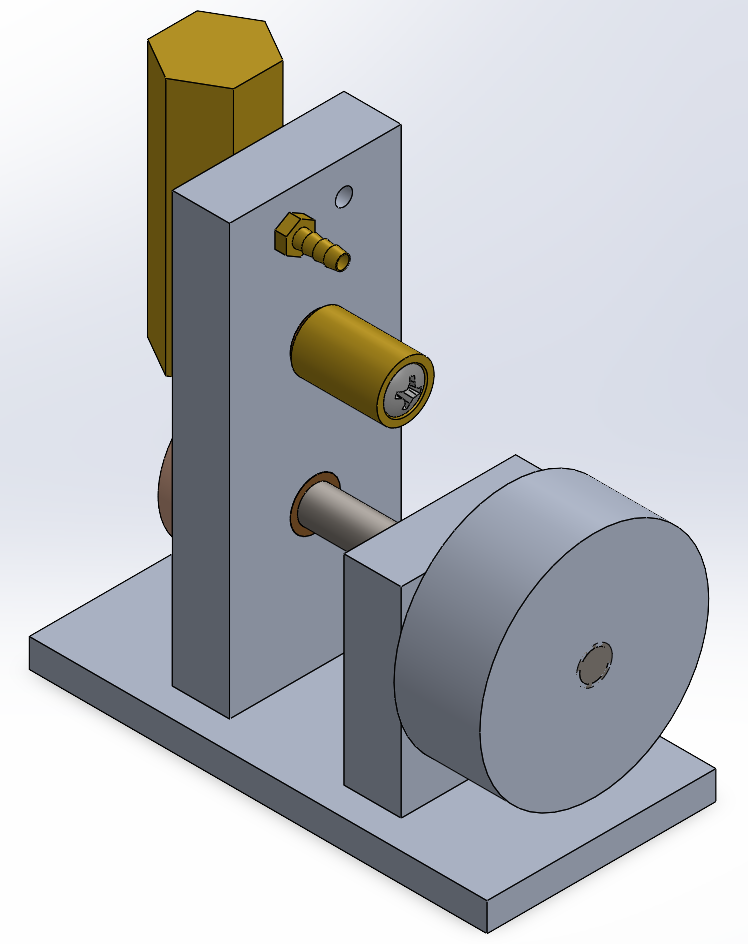
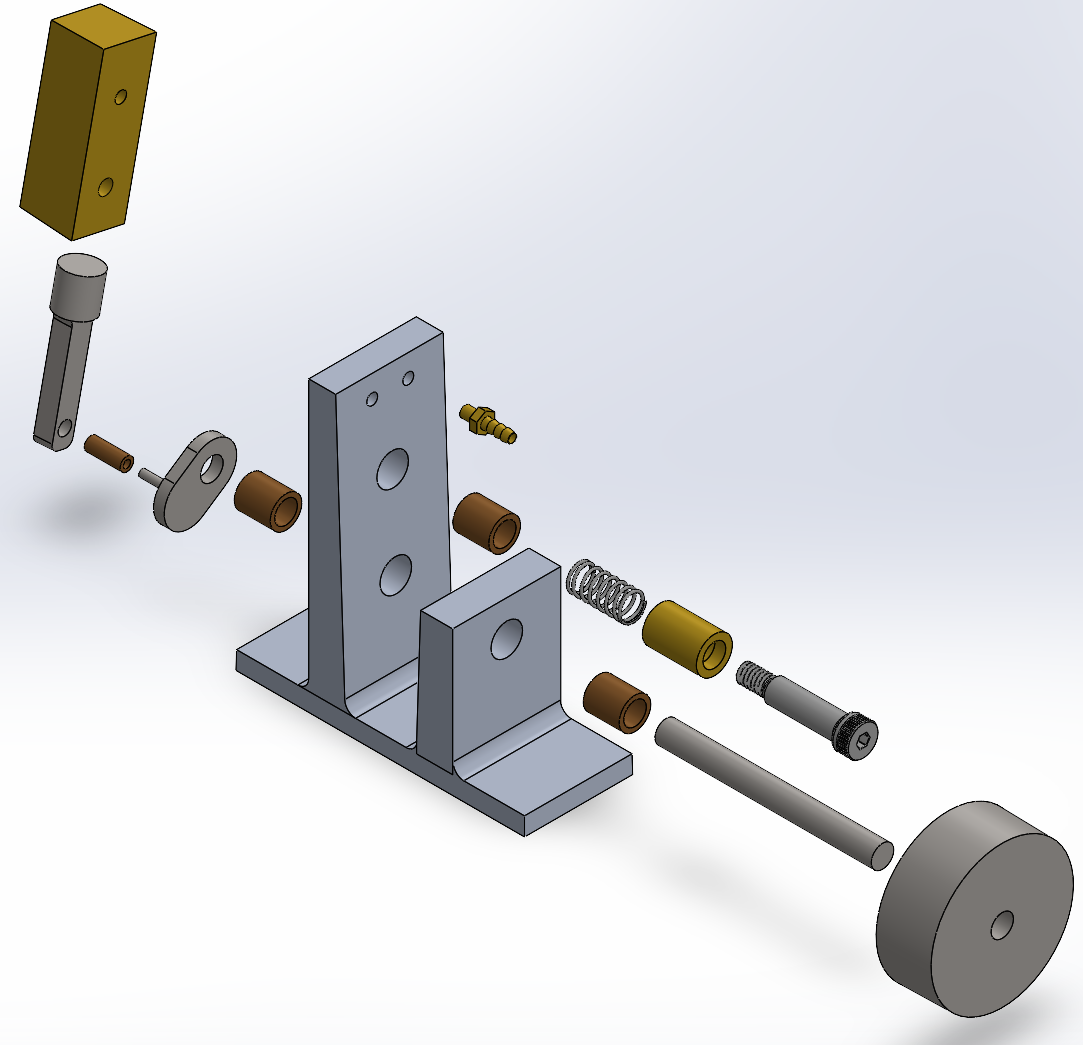
Pipsqueak engine
Skills
- CAD (SolidWorks)
- Rendering
- Manufacturing process sheets
- Developing engineering drawings
- Milling
- Turning (Lathe)
- GD&T
- Press and sliding fits
- Best manufacturing process based on given situations
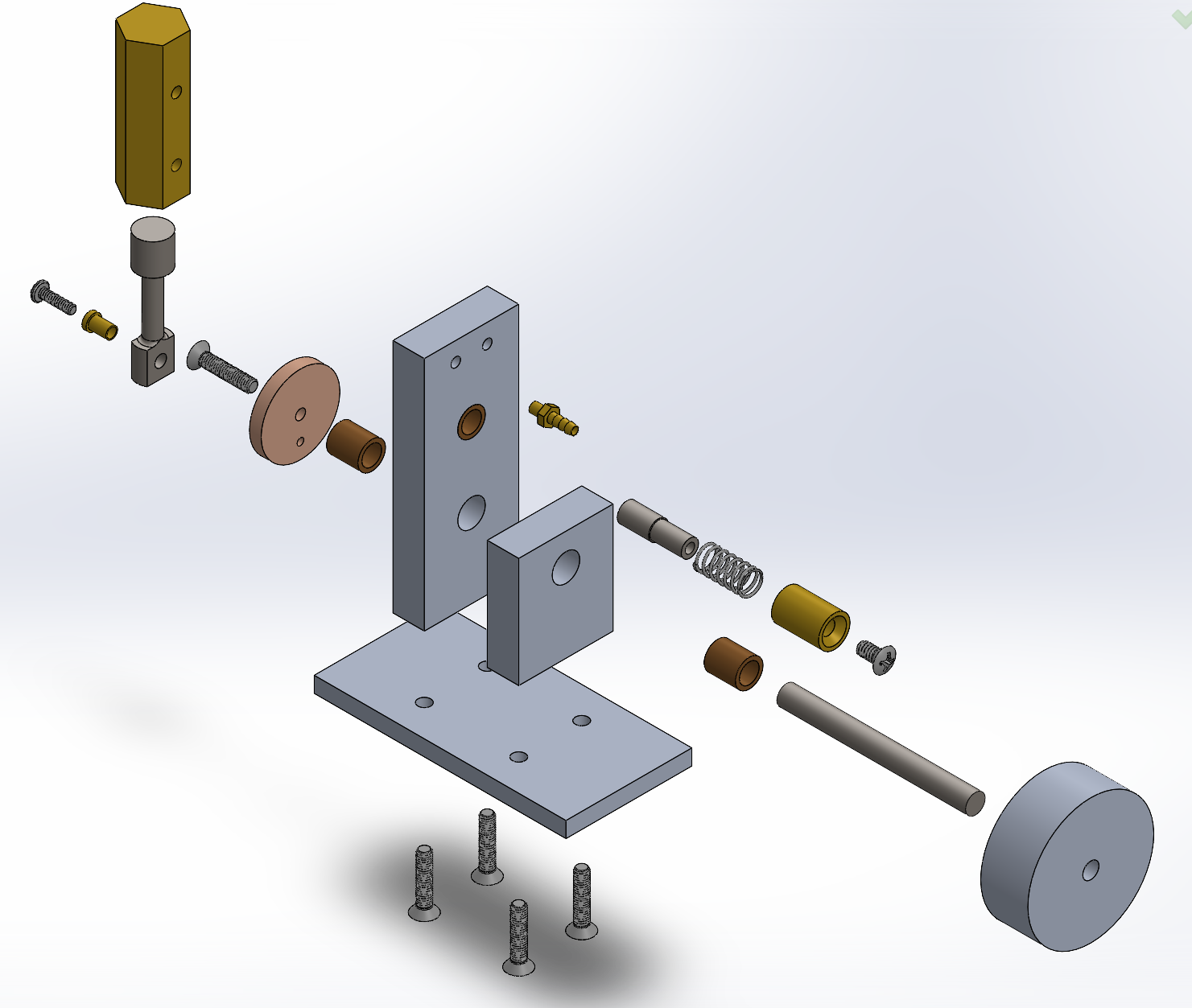
Problem
For a semester project, my group was assigned to make a “Pipsqueak Engine” that can run off of compressed air. The engine was required to have a single cylinder and a flywheel. All of the parts besides the screws and the spring were required to be machined. After the engine was completed, we were assigned the task of evaluating three potential manufacturing processes to produce one million engines per year: extrusion/drawing, machining, and powder metallurgy.
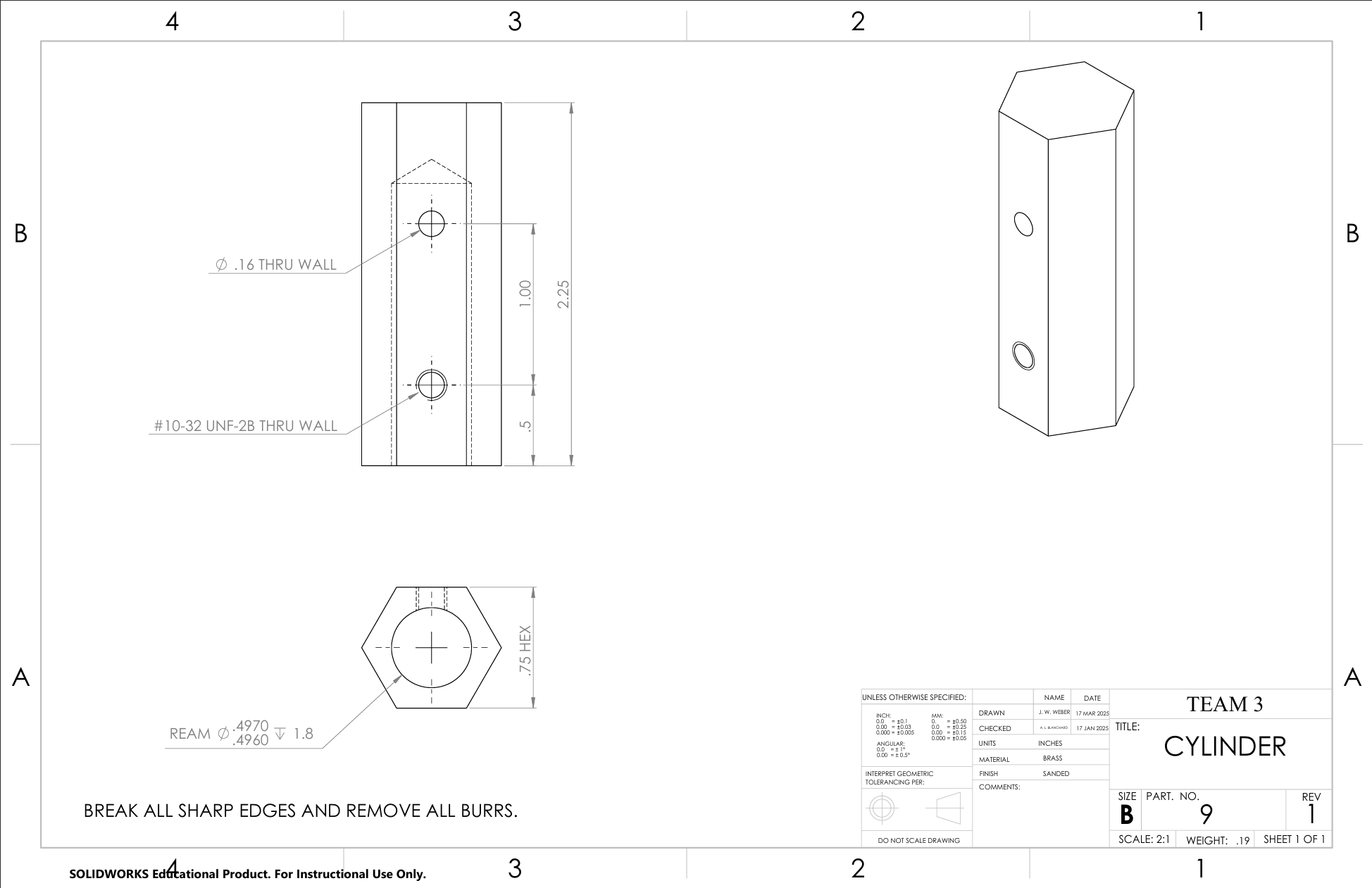
Solution
Most of the parts were made from stock and milled or turned.
Process
- Create process sheets
- Machine and turn the different parts
- Assemble the engine
- Perform testing
- Fix any parts necessary
- Change parts to be manufacturable through new processes
- Create new process sheets according to scenario
- Complete write-up
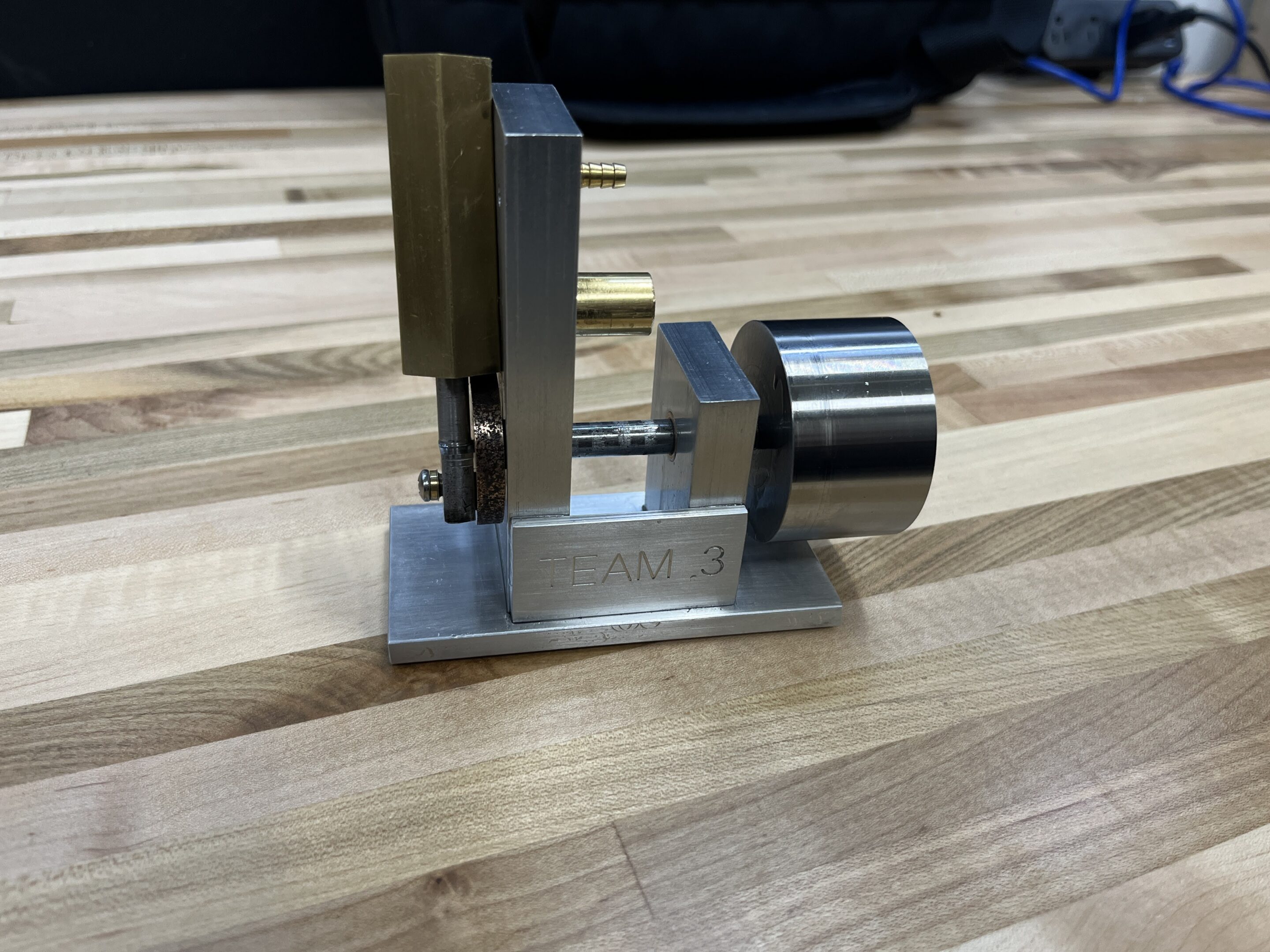
Testing
Testing revealed that the running clearances between the piston and cylinder and between the crankshaft and uprights were a little tight. Even though they were tighter than we wanted, we decided to go ahead and let it wear in over time as it ran.
Outcomes
After running the engine for a while, the tolerances were perfect. In the class competition, we won second place for the most efficient engine (requiring the least psi to run for 10 seconds). For this project, I had the opportunity to machine the flywheel, cylinder, the small upright, spring cover, and piston. I also had the opportunity to make or check all of the manufacturing drawings for the finalized engine.